


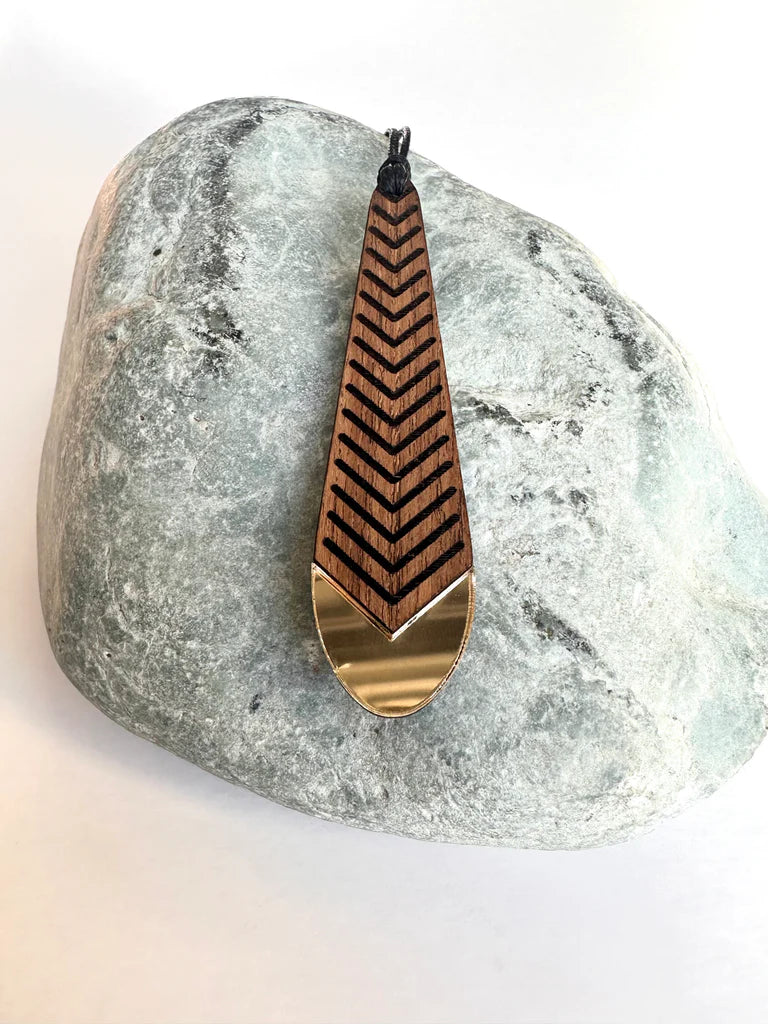
Huia Feather Pendant
Couldn't load pickup availability
An ornate feather pendant from the legendary manu/bird Te Huia
Worn in the hair or around the neck, Huia manu were a most prized possession and was stored in ornate carved wooden boxes called wakahuia.
this from wikipedia:
"The huia is one of Aotearoa best-known extinct birds because of its bill shape and beauty, as well as its special place in Māori culture and oral tradition. The bird was regarded by Māori as tapu (sacred), and the wearing of its skin or feathers was reserved for people of high status."
This contemporary take on a traditional taonga, introduces a new form and balance that doesn't shy away from a modern shape and style whilst retaining our proud history
A TroubleMaker favourite this has been designed by one ultimate artist who graciously has allowed us to make and distribute them
Materials
Materials

The materials used and sourced for our contemporary designs are as follows:
Lining: Black polycotton blend
Feathers: Our contemporary korowai designs include a variety of colored craft feathers for fashion industry clothing and costumes, particularly hen and rooster coque feathers.
Bands: Our contemporary korowai designs include machine made taniko bands made locally in Aotearoa, New Zealand.
Shipping & Returns
Shipping & Returns
Dimensions
Dimensions
Nau mai, Haere mai, Welcome.
We'd love to help you find your perfect fit. Just as we would if you were visiting us in person, we'll walk you through each step together.
Step One

Step Two
Now let's find your perfect fit.
The great thing about our korowai is that they're designed to sit comfortably over your clothing. A quick measurement around your upper chest and shoulders will help us recommend the best size.
| Size | Fits Chest Measurement |
| Small | 95–105 cm |
| Medium | 105–115 cm |
| Large | 115–125 cm |
| XL | 125–135 cm |
| 2XL | 135–145 cm |
| 3XL | 145–155 cm |
📧 Email us: orders@korowaibyhiria.com
Care Instructions
Care Instructions

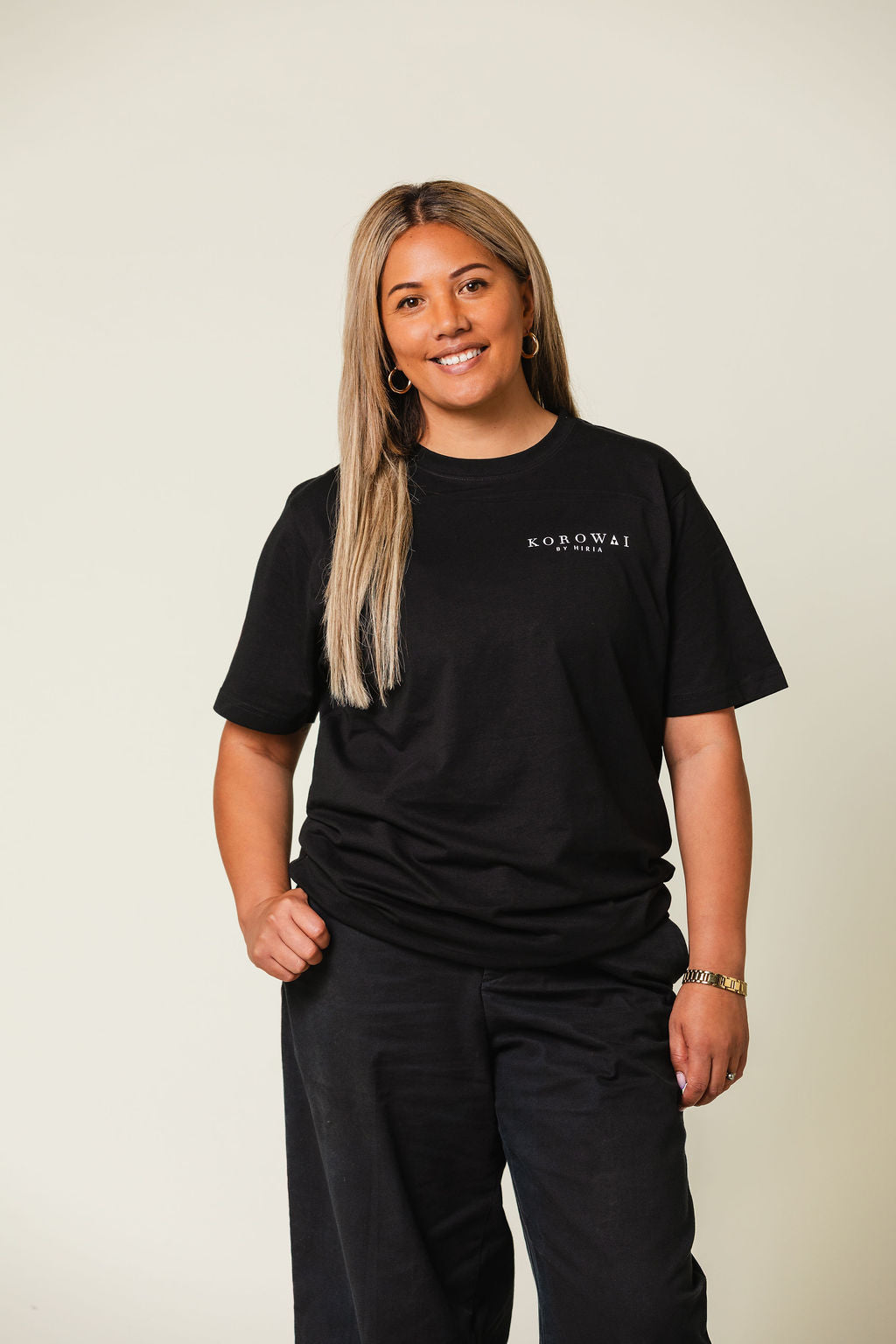
Proud to be Māori Made in NZ since 2019
Ko Motatau te Maunga
Ko Hikurangi te Awa
Ko Tau Henare te Marae
Ko Te Orewai te Hapu
Ko Ngāti Hine te Iwi